

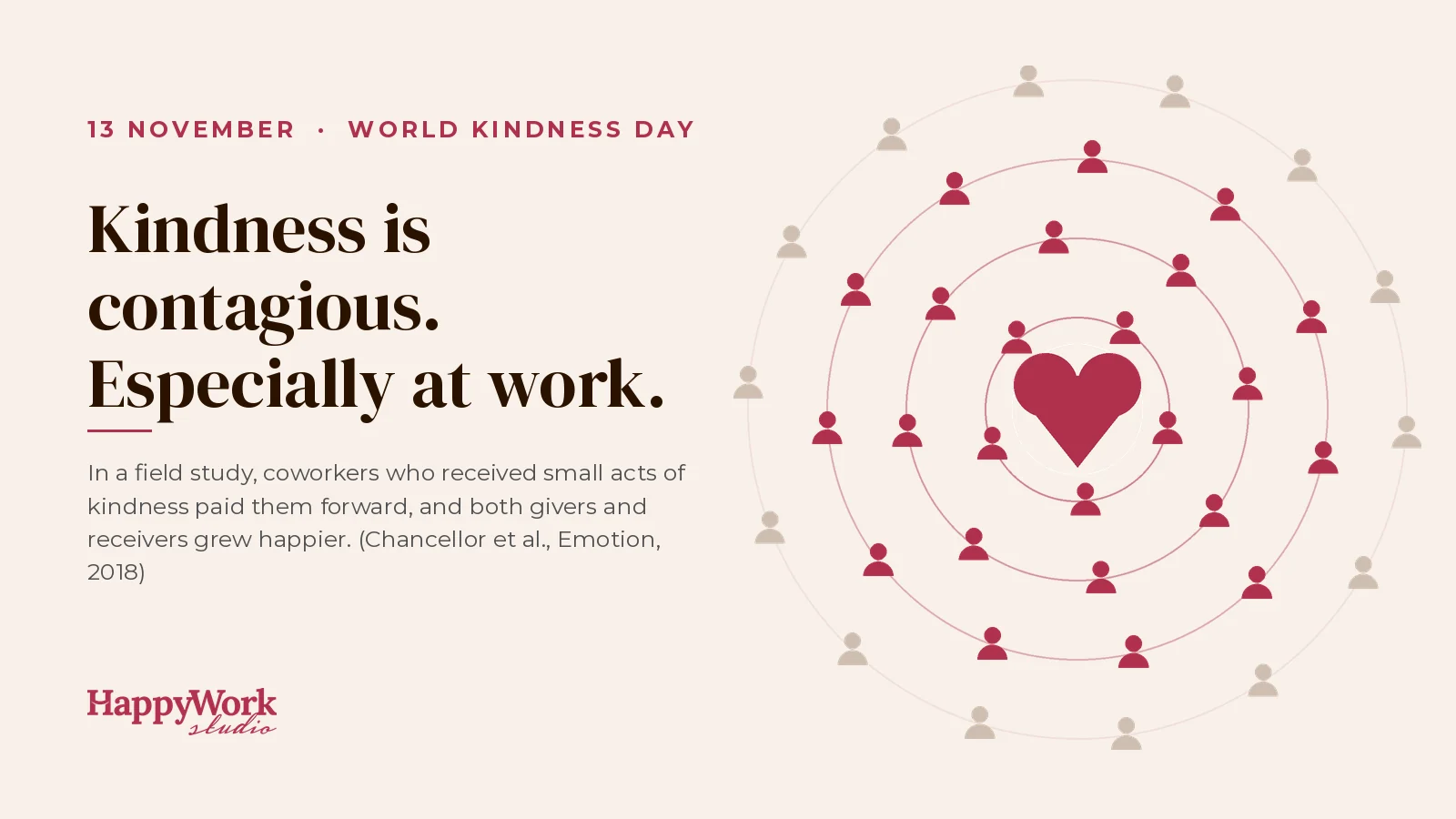
Every year on 13 November, World Kindness Day asks a simple question: what would change if we were a little kinder to each other? Inside companies, that question can sound soft. Targets, deadlines and budgets feel more urgent than being nice.
The research points the other way. How people treat each other at work shows up in effort, performance and retention. Kindness is one of the few culture levers that costs almost nothing and starts working the same day.
What rudeness really costs
Christine Porath and Christine Pearson spent years studying incivility at work: the small slights, dismissive emails and interrupted meetings most of us have seen. In their Harvard Business Review article "The Price of Incivility" (2013), they reported what happened to people on the receiving end.
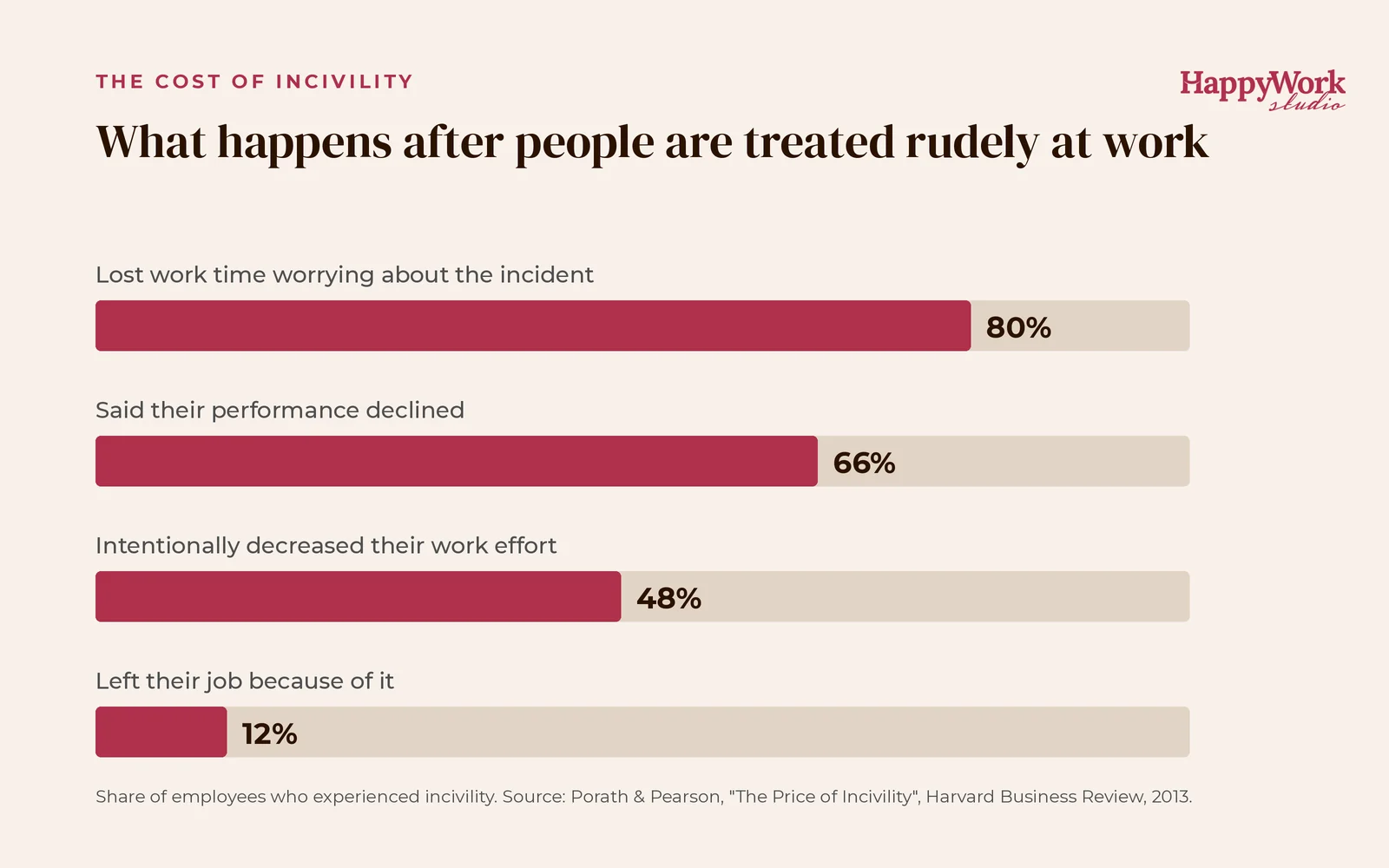
Four out of five lost work time worrying about the incident. Two thirds said their performance declined. Almost half deliberately pulled back their effort, and one in eight left the company. None of these costs appear on a budget line, but every team pays them.
Kindness spreads, and both sides gain
The good news is that the opposite behavior is contagious too. In a field study published in the journal Emotion (Chancellor, Margolis, Jacobs Bao & Lyubomirsky, 2018), researchers worked with employees at Coca-Cola's office in Madrid. A group of "givers" was asked to do small acts of kindness for a set of coworkers over four weeks.
- Receivers paid the kindness forward to other colleagues, so it travelled beyond the original pair.
- A month after the study, receivers reported being happier than the control group.
- Givers reported higher life and job satisfaction and fewer depressive symptoms at follow-up.
In other words, one small act does not stay small. It moves through a team the way ripples move through water.
Why this matters more in 2026
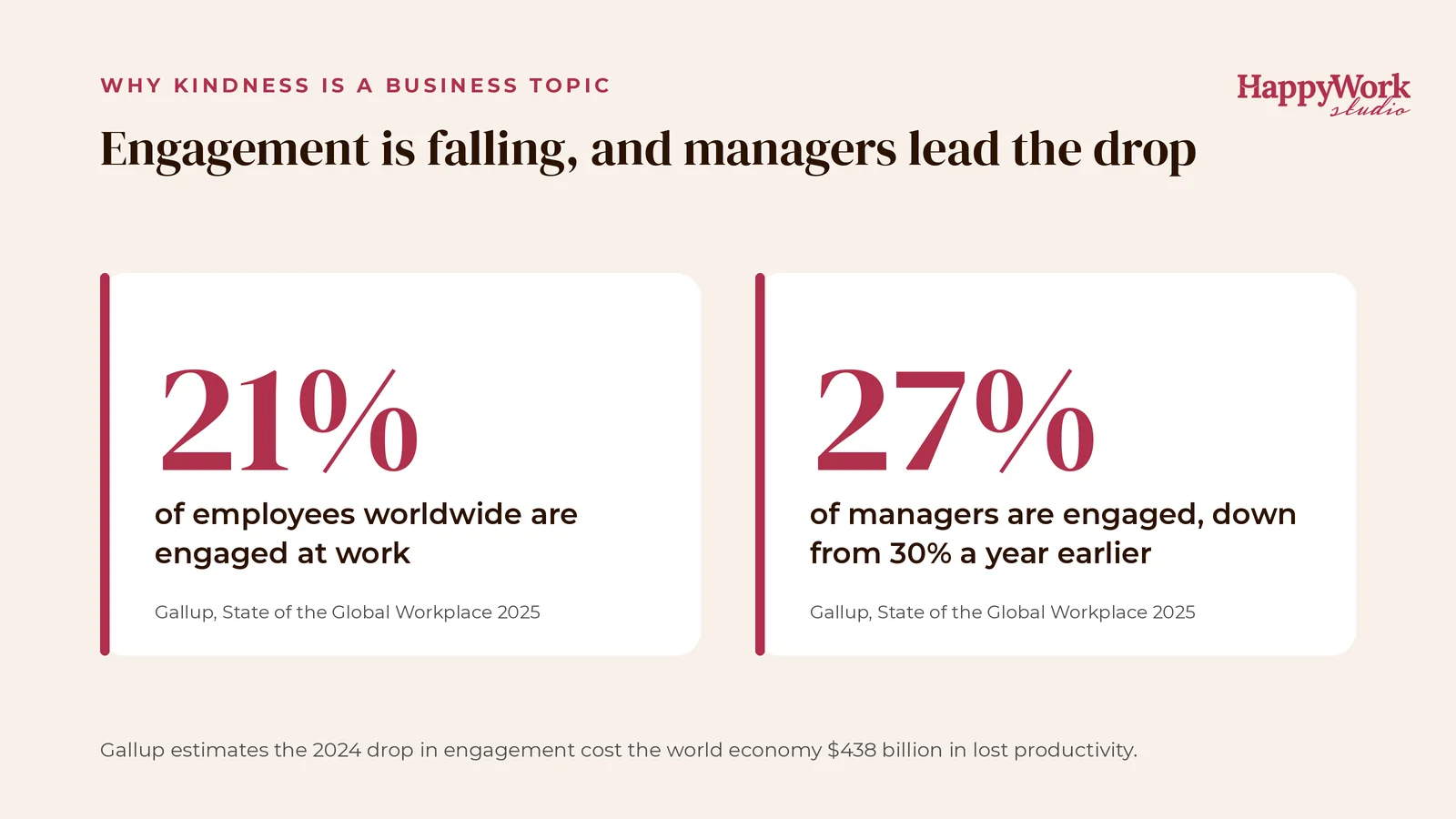
Engagement is under pressure worldwide. Gallup's State of the Global Workplace 2025 report found that only 21% of employees are engaged at work, and that manager engagement fell from 30% to 27% in a single year. Gallup estimates the 2024 drop in engagement cost the world economy $438 billion in lost productivity.
Managers set the emotional tone of their teams. When they are stretched thin, small courtesies are often the first thing to go. That is also why they are such a strong place to start again.
For hybrid and international teams the effect is even stronger. With fewer chance meetings in the corridor, a thoughtful message, a public thank-you in the team channel or a quick offer of help carries more weight than it would in an office.
Three small acts to try tomorrow
- Say thank you, and say exactly why. "Thanks for catching that error in the client report before it went out" lands far better than "thanks!"
- Offer ten minutes of real help. Ask a colleague what is blocking them this week, then help with one piece of it.
- Assume good intent before you reply. Before answering a sharp email, read it once more as if a friend had written it on a busy day.
Kindness will not fix every culture problem on its own. It is still one of the cheapest and fastest levers a team has, and it works best when leaders model it every day, not only on 13 November.
How Happy Work Studio can help
Happy Work Studio helps organizations build happy, high-performing and human workplace cultures. Our Culture Design and Happiness at Work programs turn values like kindness into everyday rituals that teams actually live, in the office, in hybrid set-ups and across borders. Get in touch at info@happywork.studio.
Sources
- Porath, C. & Pearson, C. (2013). The Price of Incivility. Harvard Business Review, January–February 2013.
- Chancellor, J., Margolis, S., Jacobs Bao, K. & Lyubomirsky, S. (2018). Everyday prosociality in the workplace: The reinforcing benefits of giving, getting, and glimpsing. Emotion, 18(4), 507–517.
- Gallup (2025). State of the Global Workplace 2025.