

In Türkiye, 24 November is Teachers' Day. Schools fill with flowers and handwritten cards, and many adults message a teacher who shaped them. It is also a good moment to think about the teachers we meet after school: the colleague who explained the unwritten rules in our first month, the manager who trusted us with a stretch project, the mentor who answered a late-night message before a big presentation.
These people rarely appear on an org chart. Their impact still shows up in the numbers.
What the Sun Microsystems study found
In 2006, Sun Microsystems published one of the best-known company studies on mentoring. It followed about 1,000 employees over five years and compared people in its mentoring program with colleagues who were not.
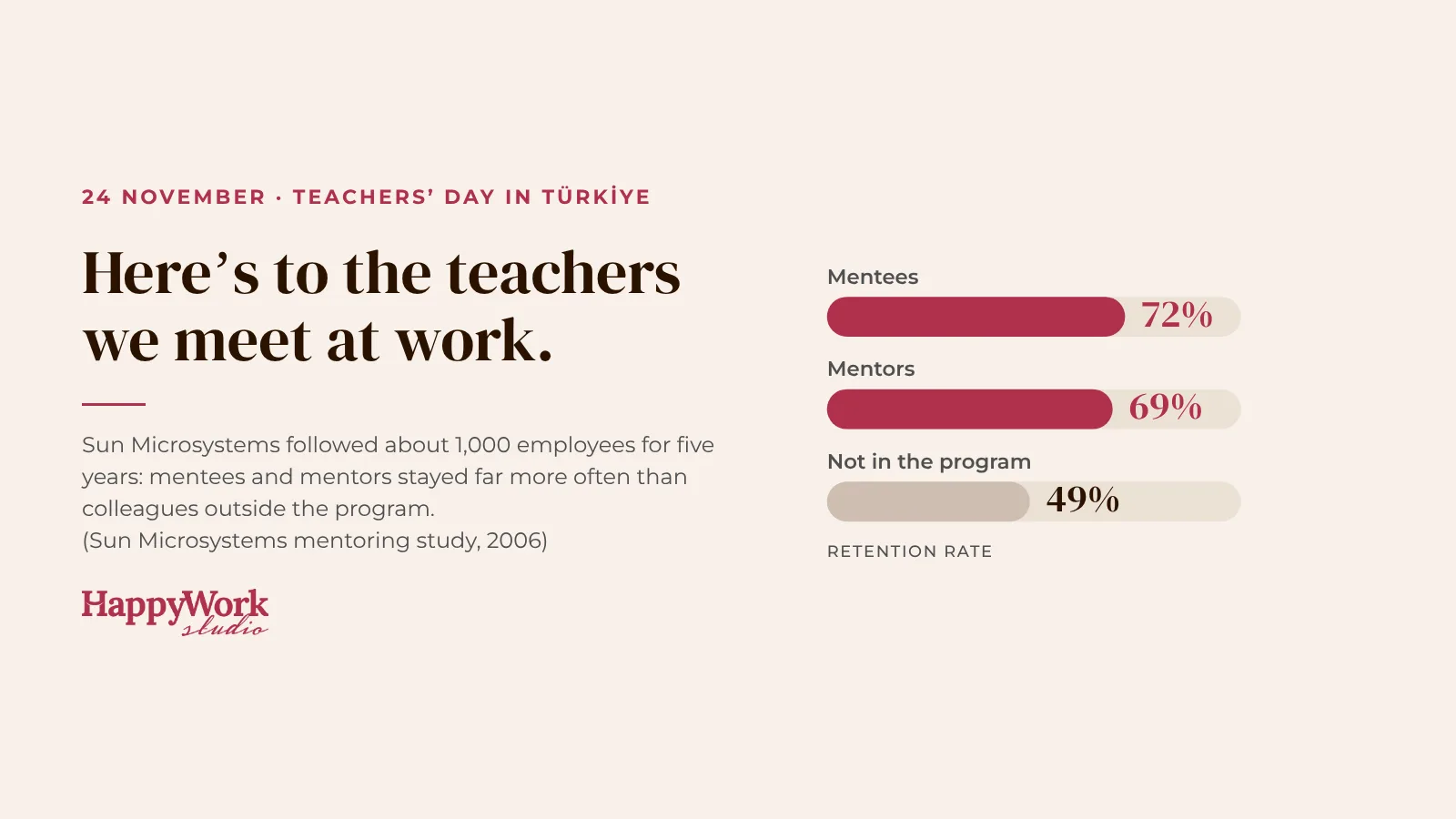
- Retention: 72% of mentees and 69% of mentors stayed, compared with 49% of employees outside the program.
- Pay progress: 25% of mentees and 28% of mentors moved up a salary grade, compared with 5% of managers who were not mentors.
The surprise is the second group. Mentors gained as much as the people they helped. Teaching someone else makes you reflect on your own work, widens your network across levels, and keeps you close to what is really happening in the business.
Why it matters more for international teams
For international teams, and for foreign managers leading teams in Türkiye, much of what a new person needs to know is not written down: how decisions are really made, how feedback is given, which meetings matter. A mentor turns months of guessing into a few honest conversations.
Mentoring also works in both directions. Junior colleagues are often the teachers on new tools, AI workflows and what younger customers expect. Reverse mentoring gives them a voice and gives leaders a fresh view.
How to start this week
- Thank one teacher at work. Send a short, specific message to someone who taught you something this year. In Türkiye, today is a natural day to do it.
- Offer 30 minutes. Pick one newer colleague and offer a monthly half hour, with no agenda except their questions.
- Make it visible. Ask managers to name the mentoring they do in their goals, so it is seen as real work, not a favour.
- Try a reverse pair. Match one senior leader with one junior colleague on a topic the junior knows better.
How Happy Work Studio can help
Happy Work Studio designs leadership and culture programs that turn learning from each other into everyday habits: mentoring circles, feedback rituals and leadership journeys for international and Türkiye-based teams. Get in touch at info@happywork.studio.