

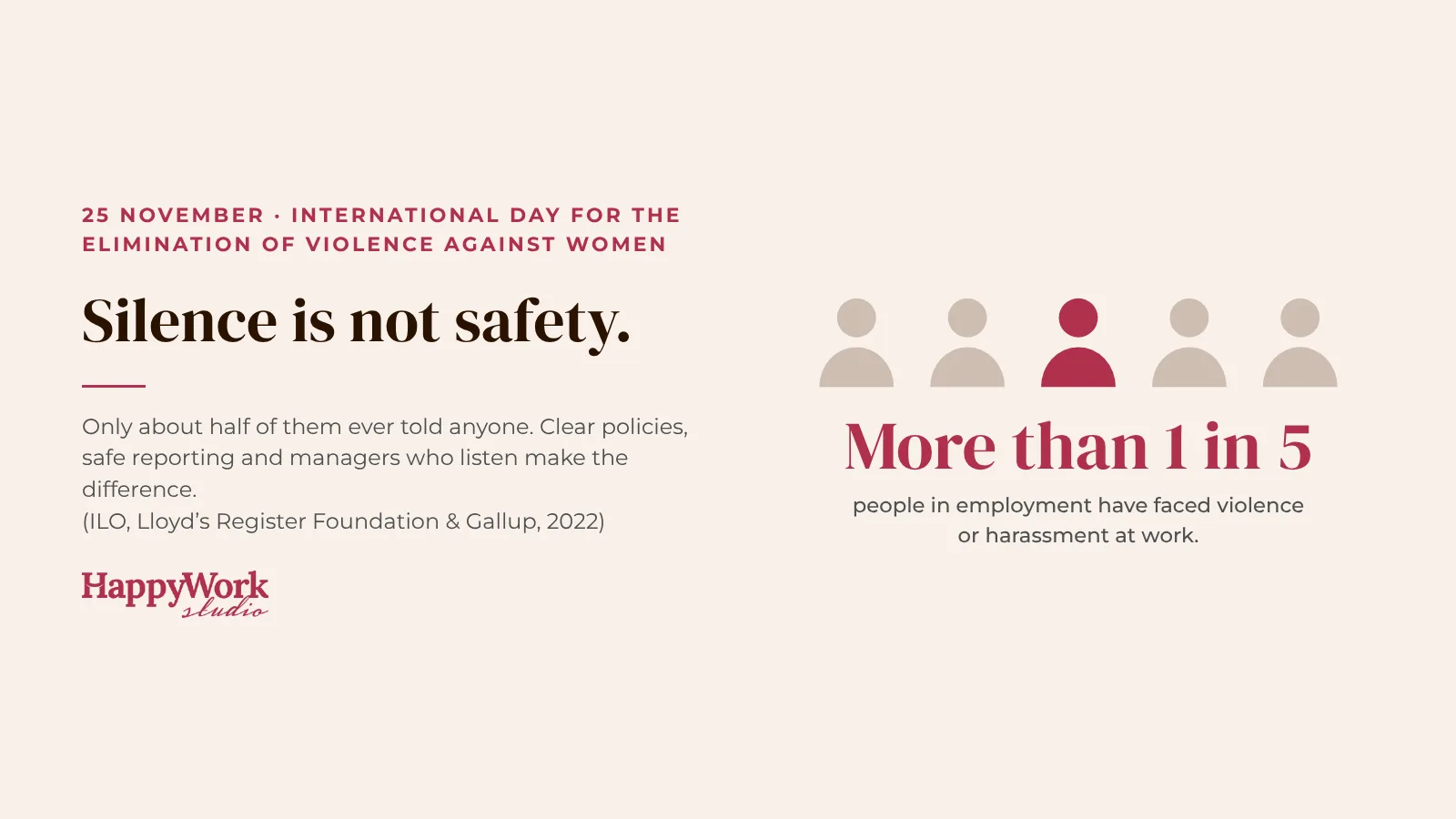
25 November is the International Day for the Elimination of Violence against Women. It also opens 16 days of global action that run until 10 December. The workplace is part of this conversation, because it is where most adults spend a large share of their waking hours.
What the global data shows
In 2022, the International Labour Organization, Lloyd's Register Foundation and Gallup published the first global survey of people's own experiences of violence and harassment at work.
- More than 1 in 5 people in employment (almost 23%) had experienced violence or harassment at work, whether physical, psychological or sexual.
- Psychological violence and harassment was the most common form: 17.9% had experienced it at some point in their working life. 8.5% had faced physical violence and harassment.
- 6.3% had faced sexual violence and harassment, with women particularly exposed.
- Only about half of the people affected had told anyone, often only after it had happened more than once. Common reasons for staying silent were feeling it would be a waste of time and fearing for their reputation.
Silence is a culture signal
The last finding matters most for leaders. If half of the people affected never speak up, a quiet inbox does not mean a safe workplace. It may mean people do not trust the process, or do not believe anything will change.
That is why psychological safety and harassment prevention belong together. A team where people can raise a small concern without fear is also a team where serious problems surface early.
Three questions for every leadership team
- Is our policy clear, and does everyone know where to find it? A policy that lives in a folder nobody opens protects no one. Put it in onboarding, in plain language, in every language your team uses.
- Can people report safely, including anonymously? Offer more than one channel, so that nobody has to report to the person they are reporting about. Protect people who speak up from retaliation.
- Are our managers trained to listen and act? The first conversation decides whether people speak again. Managers need to know how to listen without judging, what they must escalate, and how to follow up.
Beyond 25 November
International standards already exist. The ILO's Violence and Harassment Convention (C190) sets out a shared framework for preventing and addressing violence and harassment in the world of work. For companies, the practical work is the same everywhere: clear rules, safe channels, trained managers, and leaders who model respect every day, not only on awareness days.
How Happy Work Studio can help
Happy Work Studio supports organizations in building respectful, psychologically safe cultures through culture check-ups, leadership training and team workshops. Get in touch at info@happywork.studio.
If you or someone you know is in immediate danger, contact local emergency services.
Sources
- ILO, Lloyd’s Register Foundation & Gallup (2022). Experiences of violence and harassment at work: A global first survey.
- ILO News (2022). Violence and harassment at work has affected more than one in five people.
- UN News (December 2022). More than 1 in 5 worldwide suffering from violence at work: ILO.